
In Devotion to Nettle
Seed Moon, Blood Moon, and the work of rooting again

It is the night before the Blood Moon, the house is half packed, and outside the garden lies silver under the moonlight, every stone and leaf exposed in that pale, watchful glow.
Tomorrow the sky will darken. The Full Moon of the Seed Moon will pass through shadow. The Earth will stand between Sun and Moon, and the light we are used to will turn iron-red.
A total lunar eclipse.
For a brief stretch of time, everything we take for granted will move through the shadow first.
They call it a Blood Moon.
The light will look as if it has been dipped in rust and memory.
I have been watching the sky all week.
Boxes line the walls. Papers sorted into small, decisive piles. The doorway open more often than closed. The house no longer feels settled. It feels transitional. Like it is already loosening its grip on us.
I feel the same.
A thinning.
A sharpening.
The eclipse removes glare. It shows you what stands between you and your own light.
Tomorrow night the Earth will cast its shadow upward.
And at my feet, just beyond the stone threshold, a small nettle plant has pushed through the soil.
Two leaves. Serrated. Unmistakable.
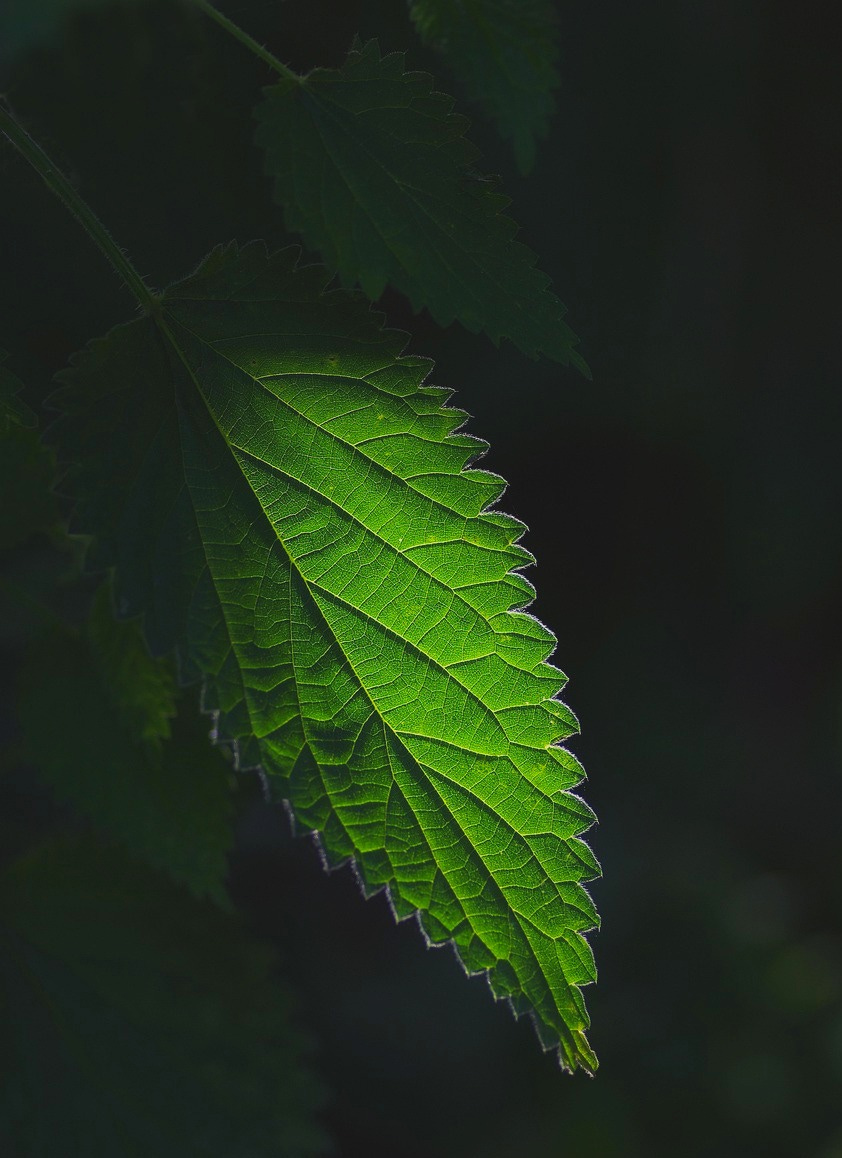
Iron in the sky.
Iron in the ground.
Iron in the blood, I am strengthening before I step into a new land again.
This eclipse falls in the Full Moon of the Seed Moon.
Some call it the Worm Moon. Some the Crow Moon. In older farming calendars it marked the soil softening, the first turning of earth after frost.
We have not reached the Bud Moon yet.
Nothing green is breaking the surface.
This is still the underground phase.
This is the moon of choosing what will root. Of committing seed to soil. Of deciding what you are willing to tend.
And as I prepare to leave one soil and root into another, nettle is already standing at the door.
The Jar on the Counter
Nettle was the first herbal tea my mother gave me.
Most people know nettle. They know the sting. They know to avoid the patch at the edge of a field. Few remember how deeply she was woven into daily life. Into kitchens. Into cloth. Into hunger seasons. Into the quiet ways women kept families standing.
I was a lanky child. All elbows and knees. I moved fast. Climbed walls. Hung upside down from trees until my hands ached. I ate well, but my body burned through everything. My bones showed. My wrists were narrow. I did not settle easily into myself.
My mother never explained what she was doing.
There was simply always a jar on the kitchen counter.
Dark green. Left to steep for hours. Sometimes overnight. The glass stained slightly at the rim.
She poured the first cup strong. Later she refilled the same leaves and poured again. By the third steep, the liquid was saved and poured slowly over my hair after washing. Green water running down my back. The scent stayed on my skin.
It was ordinary. Part of life. It was food and medicine.
In Hungary, sorrel stew sits on almost every table in spring. Each family makes it differently. I have tasted many versions since leaving home. None tasted like my mother’s.
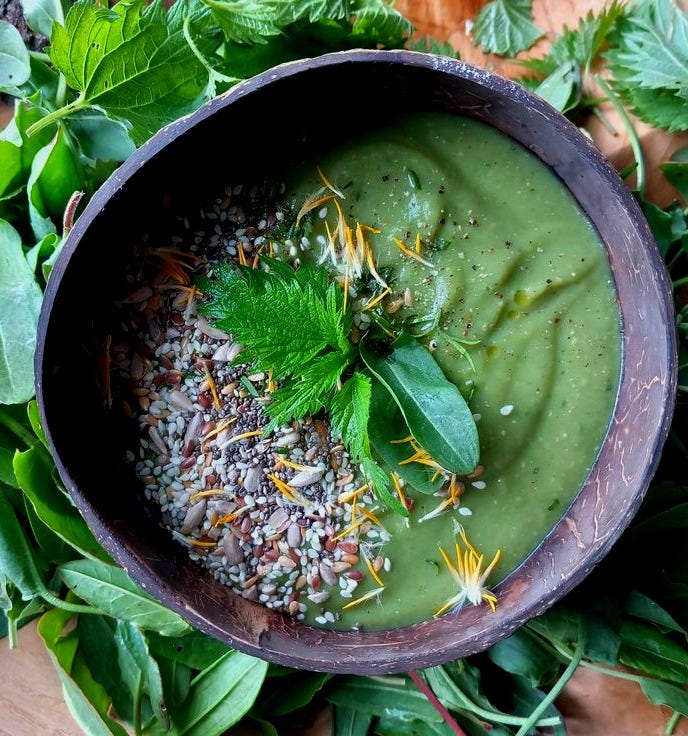
Years later I asked for the recipe. I expected measurements. She shrugged.
“It’s more nettle than sorrel.”
Of course it was.
Even in dishes that carried another name, nettle was there.
A woman watching her child and responding with what grew close to the soil.
There was always that jar.
And I drank.
The Sting and the Cool Gang
Long before I knew the word herbalist, I was already brewing things in secret.
I would take old jars from the kitchen, the ones with lids that never quite sealed properly, and fill them with whatever I could gather. Rainwater from the barrel if I could reach it. Tap water if I couldn’t. I crushed leaves between stones, ground petals into green paste with the heel of my palm, stirred everything together with sticks as if I were preparing something important, something powerful, something that required focus.
They were lotions and potions. That is what I called them. I believed in them completely.
Nettle was always there. She grew in the meadows, at the edge of paths, near fences that leaned and hummed in the summer heat. She stood tall and bright, daring us to approach.
We were wild and free then. Sunburnt shoulders. Mud under our nails. Hair tangled from running through fields without looking back. We formed little gangs without naming them, testing each other’s courage in small, feral ways.
“Go on then,” someone would say, pointing at the nettle patch.
And we would reach in.
Bare hands. Quick. Trying not to hesitate. Trying not to show the flicker of fear. The sting came fast, blooming across the skin in tiny raised lines that pulsed and burned and made us feel alive in a way that was sharp and immediate. We would laugh, even if our eyes watered, even if we wanted to shake our hands out in secret.
Belonging required contact.
We caught tiny frogs too, scooping them from damp grass near the ditch, holding them between cupped palms that were still tingling from nettle. I was afraid of them. Not for any reason I could name. It was a fear I had absorbed, inherited without question. Still, I picked them up. Cold, soft, alive. My heart racing at first. Then steady. We learned how fragile a body could be. How easily something living could slip from your grip. We were rough and gentle in the same afternoon, facing what stung and what scared us, letting our hands teach us what was real.
The fields were our teachers. Not in words. In sensation.
If you grabbed nettle carelessly, she marked you. If you moved slowly, paying attention to where your fingers landed, sometimes you could part her leaves and harvest the top without much protest. We did not yet have the language for boundaries, but our skin was learning it.
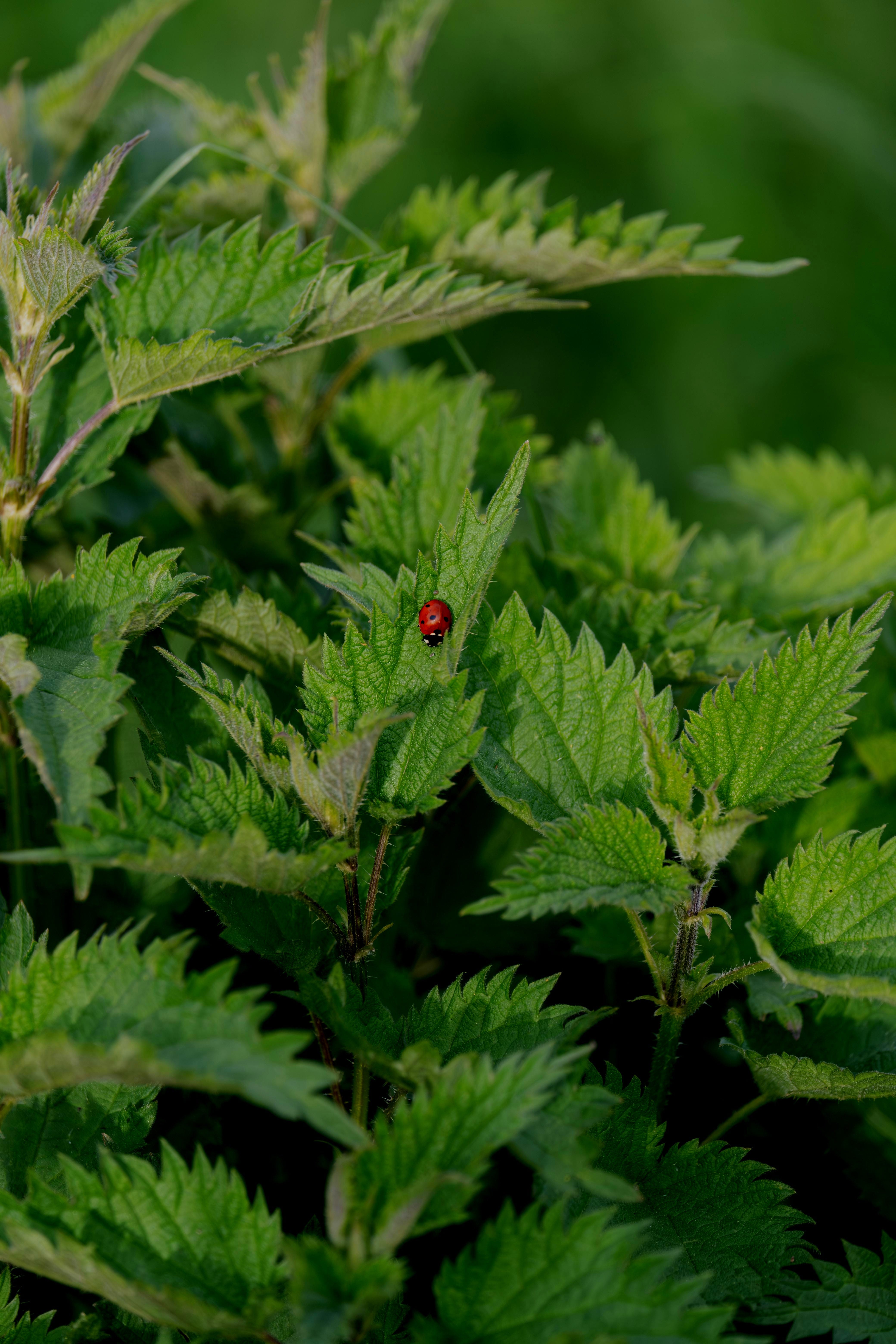
I would take those nettle tops home, crush them into my jars, convinced I was making something medicinal, something ancient, something that would change the world if only I stirred it long enough. The smell was green and thick, almost metallic. It stained my fingers. I loved that.
No one told me this was the beginning of anything.
It was simply what you did when you were a child with open land and no one watching too closely. You experimented. You tested yourself. You entered the wild and let it answer you back.
And nettle always answered.
The Plant That Followed
I did not think about nettle when I left Hungary.
I thought about language. About freedom. About the wide world that felt larger than the village fields. I thought about trains and airports and the sharp clean smell of new beginnings.
But the body remembers what the mind tries to outrun.
In the UK, I found her again along damp hedgerows, rising thick and stubborn beside stone walls darkened by rain. The air was heavier there. The soil different. But she stood the same. Tall. Serrated. Unapologetic.
I would walk past her at first. Busy. Becoming someone else. Learning new words. Learning how to hold myself in rooms where no one knew the girl who ran barefoot through vineyards and grass.
And then one spring I stopped.
The leaves were young and soft, almost tender, before the sting strengthens with the season. I picked the tops carefully, remembering the angle of the hand, the way to hold the stem without brushing the underside of the leaf. The scent rose sharp and green as soon as I tore her free.
Back in my small kitchen, I filled a jar with boiling water and watched the clear liquid turn dark. The steam carried something familiar, something that reached straight into my chest.
The first sip tasted like home, but not the house. Not the street. It tasted like the body of the land. The damp mornings. The long grass. The jar on my mother’s counter.
It steadied me in a way nothing else did. It soothed my thirst for nourishment.
She was there as my companion after I had given birth. My body had opened and not fully closed. I was tired in a way that sleep did not touch. Milk, blood, tears. The long days and longer nights that stretch a woman thin.
Large jars again. Long infusions. Dark green steeping on the counter like they had when I was a child. I drank her daily.
My blood needed building. My bones felt hollow. My nervous system hummed too loudly.
She did not soothe me.
She rebuilt me.
Spring after spring, she came.
Years later, on Pico, I missed her.
The island was raw and volcanic and beautiful in a different language. Black stone. Salt wind. A vastness that stretched toward the Atlantic. I searched for her out of habit in early spring, walking the edges of fields, scanning the ground for that unmistakable leaf.
She was not there in the same way.
The absence surprised me more than it should have. It felt like reaching for a familiar hand in the dark and finding only air.
And then Madeira.
Different again. Lush and steep. The soil red and alive. And in the cooler season, there she was, pushing through the edges of terraces and abandoned corners, bright against the earth.
And this week, as I have been packing my life once more into boxes, folding clothes, sorting papers, deciding what to carry and what to leave behind, a small nettle plant has pushed up directly in front of my doorway.
Not in the garden bed. Not at the edge of a path.
At the threshold.
I step over her as I carry things out. I pause. I look down. Two small leaves, already serrated, already certain.
The land is changing again. Mainland soil waiting. Another beginning that does not ask whether I am ready.
And there she is.
Holding the doorway.
Nettle Herbarium
Urtica dioica
Seed Moon ally. Plant of iron. Keeper of the threshold.
I am in love with nettles.
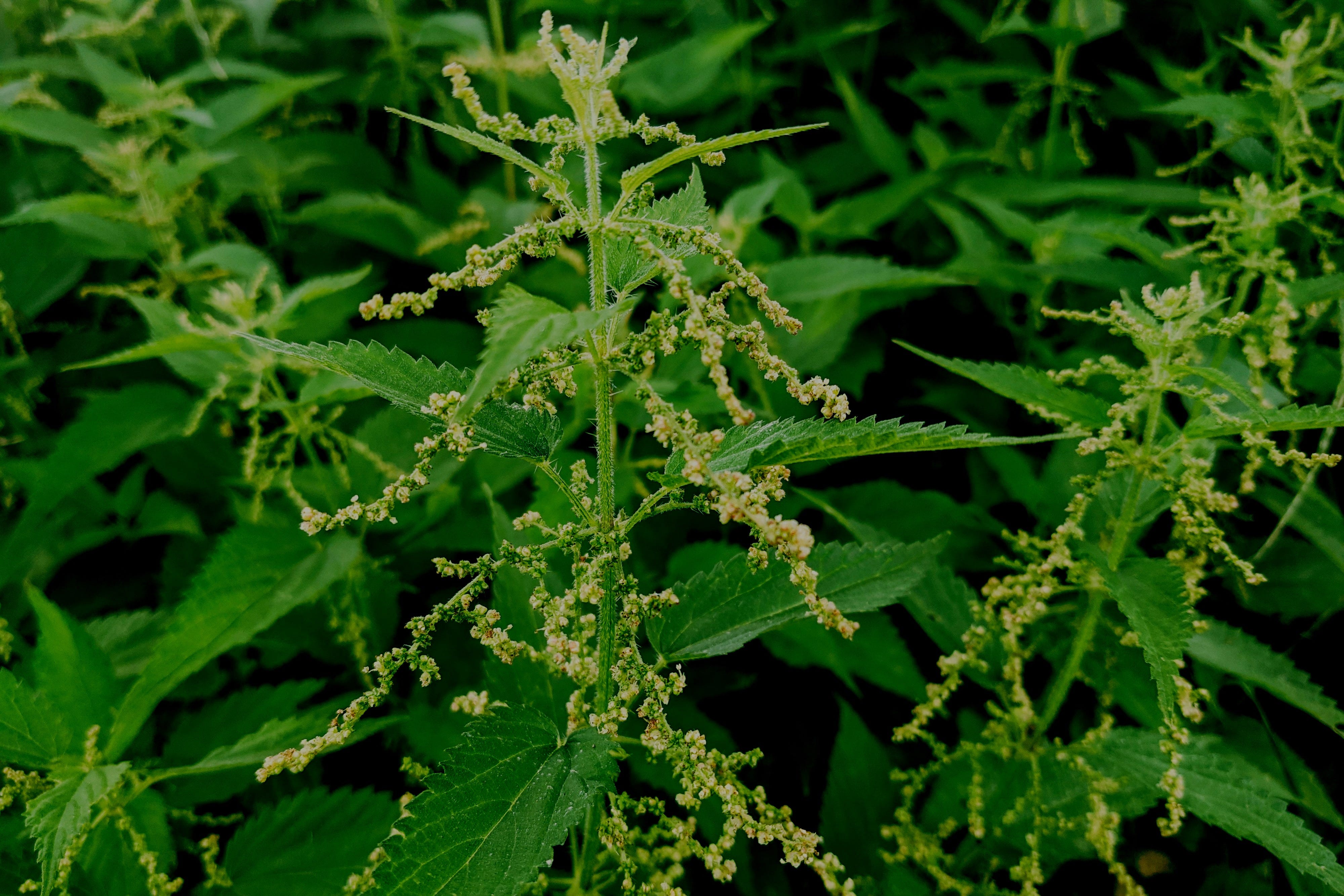
Some call her “seven-minute itch.” The sting rises fast. Small glass like hairs inject formic acid and histamine into the skin. It burns. It raises welts. Children learn quickly.
