
Linden Moon
On Tilia, Philyra, and what blooms in the space the calendar forgot

There is a line of Linden trees on the road I drive every day.
I do not know who planted them. They were here long before I arrived with my suitcase and my daughter and my particular kind of exhaustion.
Every morning I pass them. Every morning something in me says hello to that lime green, and the leaves wave hello back. On the hot days, and there have been many this spring, you smell them before you see them.
Honey-heavy and warm. Sweet in a way that is almost too much, almost fermented, like summer itself is slightly drunk. The kind of scent that reaches in and pulls something loose, untangling the frayed and frozen edges of your heart and soul.
If you have smelled it once you never forget it.
The body does not forget things like that.
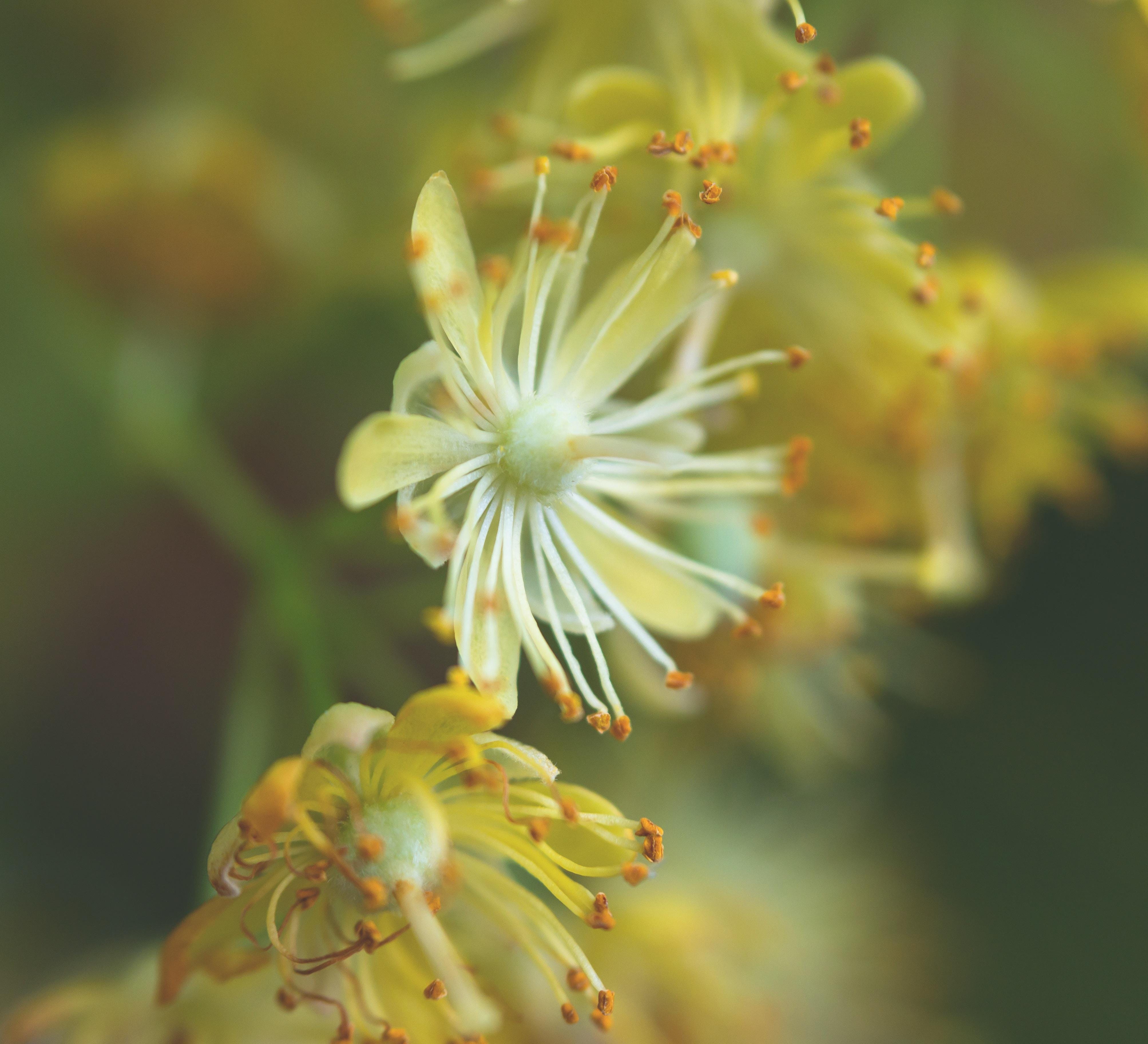
I was maybe six or seven the first time I climbed into her arms.
She stood to the left of my childhood home, an old linden, broad and unhurried, completely indifferent to whatever storm was moving through the house beside her. I had figured out the route up by then. Which piece of bark to grip first. Where to place my feet. Which branch would hold my weight and which would not.
Children who need to escape learn these things quickly.
Up in her branches the world rearranged itself. The noise fell away. The tight thing in my chest loosened. I would sit for hours watching the light move through her leaves, that particular green, almost luminous, the way it shifted and breathed and never held still. The bees moved through the blossoms around me like they owned the whole sky.
I do not carry many clear memories from my childhood. Trauma is generous that way. It softens what it can, blurs the edges of rooms and faces and the particular weight of certain days.
But I remember that tree with a precision that still surprises me.
The texture of her bark under my palms. The architecture of her branches. The scent of her flowers, sweet and heavy and nothing like anything that waited for me on the ground.
She held me. That is the only way I know how to say it.
Not metaphorically. Not poetically. She held me the way a body needs to be held.
Without condition. Without agenda. Without the complicated grief of people who love you but are drowning themselves.
My mother’s mother carried wounds she never named. My mother carried them too and passed them on the only way she knew, the only way any of us do when we have not yet found another way. I hold no blame for any of it now. Only a deep and quiet sadness for the long chain of it, generation after generation, the same unhealed thing moving through blood and bone looking for a way out.
Up in the linden, none of that existed.
And in winter, when the cold came and the cough settled into my chest, my mother would bring me tea. Linden flowers and linden honey, gathered and dried across my wardrobe all through summer, kept for exactly this moment. That cup was its own kind of love. I understood that even then, even in the middle of everything. Some medicines move through the hands before they move through the body.
Linden was my first medicine. She has never stopped being my medicine.
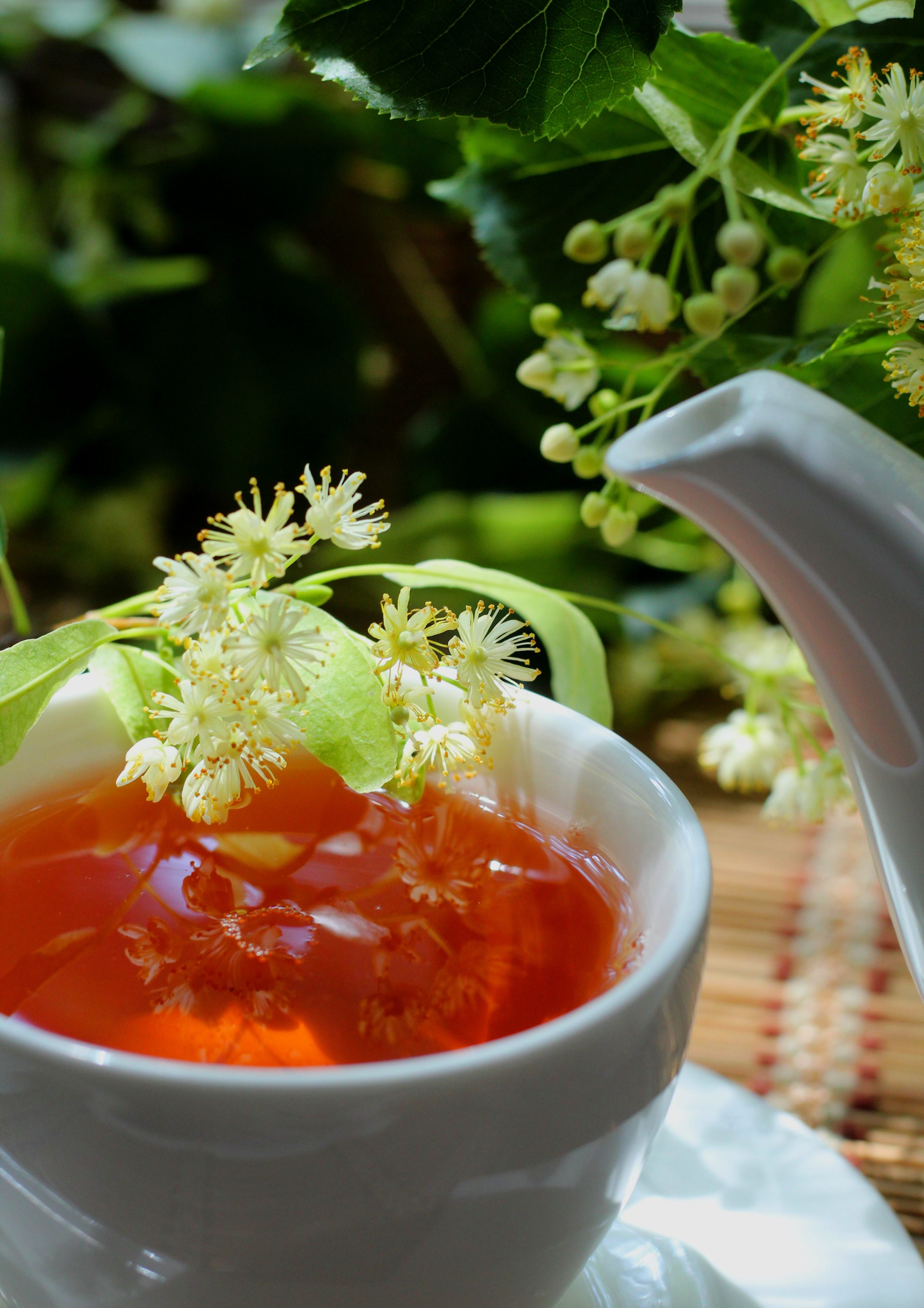
Recently, I have been having a hard time.
I say this plainly because there is no other way to say it that is honest. Since the move to the mainland, my nervous system finally did what it had been threatening to do for years. It gave way…
Not dramatically. Just quietly, the way a river goes underground. What I thought was resilience turned out to be held breath, and when it released, what came through was grief. The old kind.
Infinite, sourceless, settling exactly where it always settles in me.
The lungs.
The voice went first.
Then the desire to write.
Then the desire to do much of anything except sit very still, or sleep, or just cry. I do not have that luxury. So I reached for linden as a lifeline.
So I made the tea. And I sat with it in my hands. I let myself cry. I let myself not write. Let myself not produce. Let myself simply be held again, the way I was at seven, in the arms of the same tree.
And it was there, in that stillness, that I found Philyra.
And everything I thought I knew about why this tree has followed me my whole life changed.
Philyra was a sea nymph, daughter of Oceanus, the great encircling river of the ancient world. Her name in ancient Greek means one thing and one thing only. Linden tree.

She became the mother of Chiron, the great centaur healer, teacher of Asclepius and Achilles, the wisest being of his age.
But the birth was not gentle. Chiron arrived strange, half horse, half man, a shape the world had no category for. And Philyra, overwhelmed by what she had brought forth, could not bear it.
She begged the gods to take her out of human form. To transform her into anything else. To release her from the shame and the grief of it.
And so she became a linden tree on Mount Pelion.
Chiron grew up without a mother. Abandoned at birth, raised eventually by Apollo. He became the greatest healer who ever lived and could not heal himself.
That is the nature of his wound. The one that never closes. The one astrology has placed at the centre of every chart where he appears, undeniable, insisting, asking to be looked at directly.
The first time an astrologer read my chart, she could not stop talking about Chiron. How present he was. How overarching. I listened, I nodded, I stored it somewhere small and unreachable, and then I left it there. Because I did not want to be the wounded healer. I did not want that to be my story. I was already carrying enough.
So I filed it away and kept walking.
But here is what I did not know then.
Chiron was cradled by a linden tree.
His mother did not vanish. She transformed. She became the very thing that heals.
The tree of the heart. The one that holds fever and grief and tight chests and sleepless children. The sweetness that reaches you before you are ready for it, on a hot road, through an open window, in the middle of a hard season you did not see coming.
The linden that held me at seven was holding something far older than I knew. A lineage of abandonment turned into medicine.
A mother who could not stay in human form but never stopped offering her sweetness to anyone who needed it.
I did not come to any of this on my own.
I have to tell you about a conversation that changed something in me.
A lovely, wise woman I met here on Substack TheVisionaryAlchemist asked me one day if I had ever looked at my birth chart through the lens of true constellational/sidereal astrology. We had been talking about the thirteen moon calendar, about the way we had collectively agreed to forget a more ancient way of tracking time, and she asked it quietly, the way people ask things when they already sense the answer will matter.
So I looked.
And there it was. My sign. Ophiuchus. The thirteenth sign.
The serpent bearer. The one I had been born under and never known, because no chart I had ever been handed in my life had a place for it.
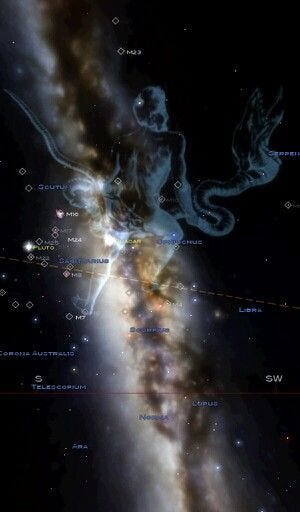
He stands in the sky between Scorpio and Sagittarius, has always stood there, and was lifted quietly from the wheel of the zodiac the way inconvenient things always get removed.
The way the thirteenth moon was cut from the calendar and twelve tidy months were handed to us instead.
The way the feminine was removed from the story of time.
The way anything that did not fit the approved story of the world got called dangerous or unlucky or simply erased so thoroughly that we stopped remembering it had ever existed at all.
We do not even remember what we have forgotten. That is how complete the erasure is.
Think about your own relationship with the number 13.
Unlucky, you were told. Buildings skip the thirteenth floor. Calendars have twelve months. The zodiac has twelve signs. Somewhere along the way the number got poisoned, tied to bad omens and dark Fridays and things to be avoided, and we absorbed that so deeply and so young that most of us never thought to ask who decided it.
Who benefits from a world that has forgotten the thirteenth moon?
Who benefits from a zodiac with a missing sign?
Who benefits from women who have forgotten their own cyclical nature, their own sacred relationship with Earth and sky and the slow turning of seasons?
The thing about a burial is that it tells you something was worth burying. Look at who it was.
Ophiuchus is Asclepius. The healer who learned his medicine from Chiron. Who watched a serpent bring herbs to its dead mate and understood something about plants and death and restoration that no school could teach.
Whose symbol, the staff with the serpent coiled around it, is still stamped on the institutions of medicine across the world, recognised everywhere, its origin mostly forgotten.
He grew too powerful. He raised the dead. Hades complained. Zeus struck him down with a thunderbolt and then, perhaps out of something like regret, placed him among the stars. The healer who threatened the order of things.
Removed. Buried. Waiting.
An entire lineage of knowing got buried. Not lost. Buried. There is a difference.
Lost things disappear. Buried things wait.
And this Blue Moon, the thirteenth moon of this year, rises tonight in the constellation of Scorpius, beside Antares, the red heart of the scorpion, the star of what lives in the depths, what cannot be kept down, what insists on being known. And from there she moves on into Ophiuchus, the sign the calendar erased.
It is a micromoon, the furthest the moon travels from Earth in her orbit. Quiet, precise and ancient.
It is the thirteenth moon. Not the thirteenth in line, but the one that should not be here at all by the calendar’s counting.
The extra. The overflow.
The one that exists because the true rhythm of things does not conform to the system we built to contain it.
The thirteenth moon, rising through the sign that was erased, shining beside the heart of the constellation that remembers what the calendar forgot.
Philyra became the Linden.
Chiron became the wound that does not heal.
Ophiuchus became a constellation the calendar refuses to name, and the thirteenth moon, the one with no place in the count, rises through him tonight.
None of this was lost. It was buried. And buried things do not stay down.

So I sit at my desk. Outside, the valley is wrapped in a soft drizzle, the oaks and pines and olives disappearing into mist. The land has been overheated for weeks, and this drizzling rain is a relief. The birds are singing like they have been waiting for exactly this.
I smell like linden.
I put the absolute on my wrists this morning, because I needed something to cut through the frozen feeling I have been moving through. One drop. That was enough. That sweetness, the concentrated heart of everything I have been writing about, rose up, and something in my chest shifted.
Not healed. Shifted.
There is a difference, and right now the difference matters.
This is what I know about Linden after a lifetime with her. She brings the heat down enough that you can think.
She opens the chest enough that the grief can move.
She has been doing this for me since I was seven years old in her branches and she is doing it right now, at this desk, in this valley, in the middle of this hard season I am still inside.
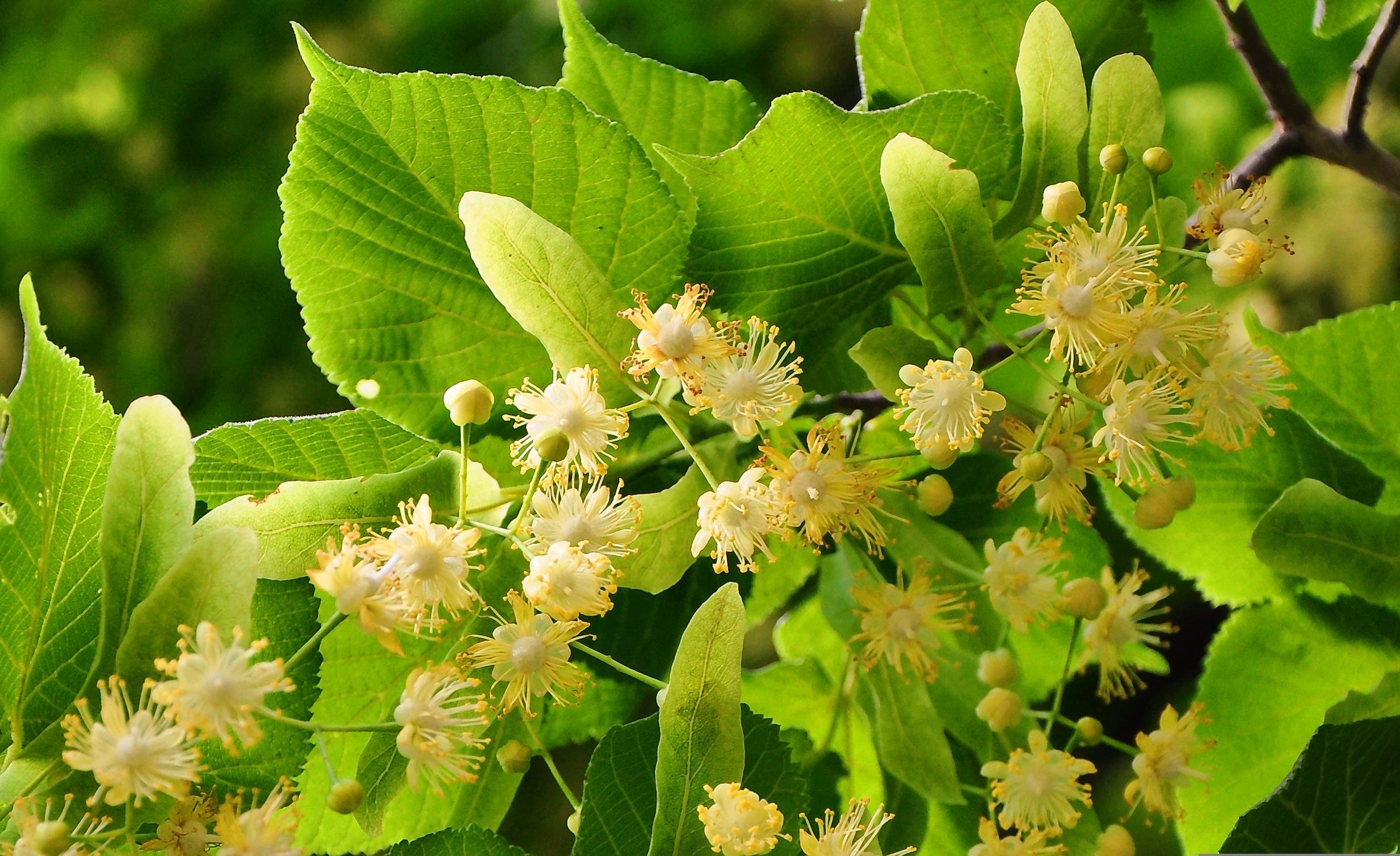
Her name is Tilia.
Say it out loud, and it sounds like what she is, soft and lifting, a little like a bell rung far off. The old people of Europe knew her long before anyone thought to write her down.
They gave her flowers to the feverish children and sat with them while the fever broke into sweat. They drank her in the evening to loosen the grip of a hard day and find their way into sleep. They reached for her when the chest was tight, and the cough would not settle, when grief sat heavy on the heart, when the heart itself raced for no reason.
Tilleul, the French still call the evening cup. A tea for the nerves. A tea for letting the day go. For centuries, she has been the plant you turn to when the body is wound too tight and has forgotten how to come down.
The way I make her is simple. Leaves and flowers together, a generous handful, hot water poured over them, and then I leave her overnight. The whole long dark of it.
On the hot days, the jar goes in the fridge. By morning, the water has changed. It has thickened. It has gone faintly gold and a little slippery, somewhere between water and something you could almost hold.
That is the mucilage.
That is her medicine made visible. The plant gives it up slowly, the way anything soft is given, only in the dark and only when nothing is rushing it.
And what that thickness does in the body is the whole teaching.
It coats. It lays a soft layer over everything raw and worn and overexposed, the throat, the chest, the nervous system rubbed thin from holding too much together for too long.
It does not take the rawness away. It covers it. It slows the signal down enough that the body remembers it is allowed to put something down. The linden does to the nerves exactly what the infusion does to the water.
It thickens. It slows. It coats. It holds.
The thirteenth moon rises tonight. The one with no official name, shining through Ophiuchus, through the heart of the scorpion, small and quiet and ancient.
I will take my tea outside when the rain passes.
If you want to sit with this, make the tea first. Then take whichever question will not leave you alone.
What have I been carrying that was never mine to carry?
Where in my body does grief live, and when did it last have permission to move?
What part of me has been written out of my own story?
What would it mean to bloom in the full heat of it, without waiting?
If my wound is also the location of my medicine, what do I know now that I could only have learned by going through exactly this?
I hope this reminded you that you do not need fixing. That you can put the tea on, sit with your own beautiful heart, soften a little, keep loving yourself, and this broken world forward.
The linden is in bloom. If this found you, I am glad.
The absolute I wore this morning is coming to the Wild Mamma apothecary soon.
I will let you know when she arrives.
If supporting this work matters to you, I receive that with more gratitude than I know how to say.
This is all so beautiful. Thank you for taking the time to break it all down to the most generous of essentials. Appreciate the astrology, the myth, and the lived embodiment. I will be making the tea and now with greater awareness for my own ritual. 🍵
Thank you for this. Oh I love linden trees. The little yellow bells not quite blooming here in Chicago but tiny buds. When they arrive the scent is magnificent